Picture this: It's a normal Tuesday afternoon. Your phone rings, and the caller ID shows it's your mother. You pick up, and you instantly hear her voice, frantic, crying, and terrified. She says she's been in a terrible car accident, she's currently at the hospital, and she desperately needs you to wire $2,000 to cover emergency uninsured medical fees right this second.
You don't hesitate. You send the money. You panic. You call her back ten minutes later to check on her... and she picks up from her living room, perfectly fine, completely confused.
Welcome to 2026.
The initial hype phase with Artificial Intelligence is officially over. While we've all been having fun generating images and asking ChatGPT to write our emails, cybercriminals have been quietly building an entirely new industry of fraud. Today, scammers don't need to be elite hackers writing complex code in dark rooms. They are buying off-the-shelf generative AI models on the dark web for $50, allowing them to clone voices, generate faces, and automate mass phishing attacks at a terrifying scale.
"In 2026, you can no longer trust your eyes or your ears. We are moving from a world of 'Trust, but verify' to a world of 'Verify, then trust'."
According to the latest reports from the Federal Trade Commission (FTC), AI-assisted fraud has cost consumers billions globally over the last year alone. But here is the good news: Once you know how these scams work, they lose their power.
Grab a coffee, pay close attention, and maybe share this with your parents. Here are the five most dangerous AI scams operating today, and exactly what you need to do to protect your money, your identity, and your sanity.
1. The 3-Second Voice Cloning Emergency
This is currently the most emotionally devastating scam on the market, purely because it preys on your love and panic. The technology behind voice cloning has advanced so rapidly that scammers now only need a mere three-second audio clip of your loved one's voice to create a hyper-realistic digital clone.
Where do they get those three seconds? A public TikTok video, an Instagram story you posted from a vacation, a YouTube short, or even a customized voicemail greeting. They feed this clip into an AI model, type whatever script they want, and the AI speaks it with your loved one's exact tone, inflection, and breathing patterns.
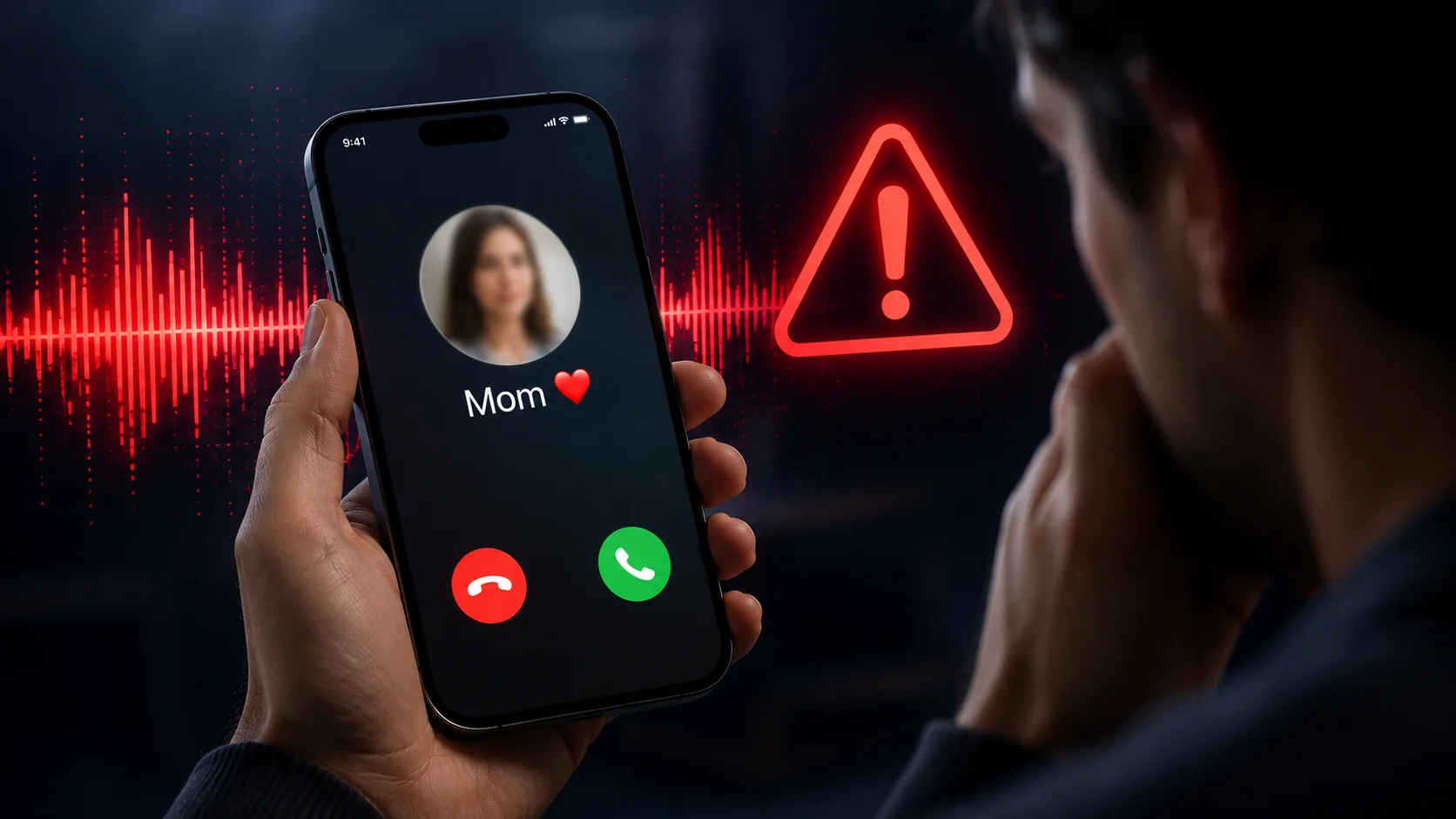
The scam is almost always an emergency: a car crash, an arrest, being kidnapped, or being stuck in a foreign country without a wallet. The goal is to force you into a state of panic so severe that your logical brain shuts down, and you send money (usually crypto or wire transfers) before you have time to think.
How to Protect Your Family
You need to establish a Family Safe Word today. It should be something random that nobody could guess (like "Purple Pineapple" or "Jupiter Rain"). If someone calls claiming to be a family member in distress and asking for money, tell them: "I will help you, but you need to tell me the safe word first."
If they can't, hang up immediately. Then, dial your loved one's number directly from your own contacts. 99% of the time, they will answer safely from their desk or couch.
2. Deepfake Video Call "Boss Fraud"
If you think seeing someone's face on a video call guarantees they are real, think again. High-level corporate employees, freelancers, and even HR departments are increasingly being targeted by real-time deepfake video calls.
Scammers use live deepfake software to map the face and voice of a CEO, a major client, or a vendor onto their own webcam feed. They will invite you to an urgent "confidential" Zoom or Teams meeting. You'll notice the video quality is slightly degraded (they will blame bad hotel Wi-Fi) which conveniently hides the digital rendering artifacts.
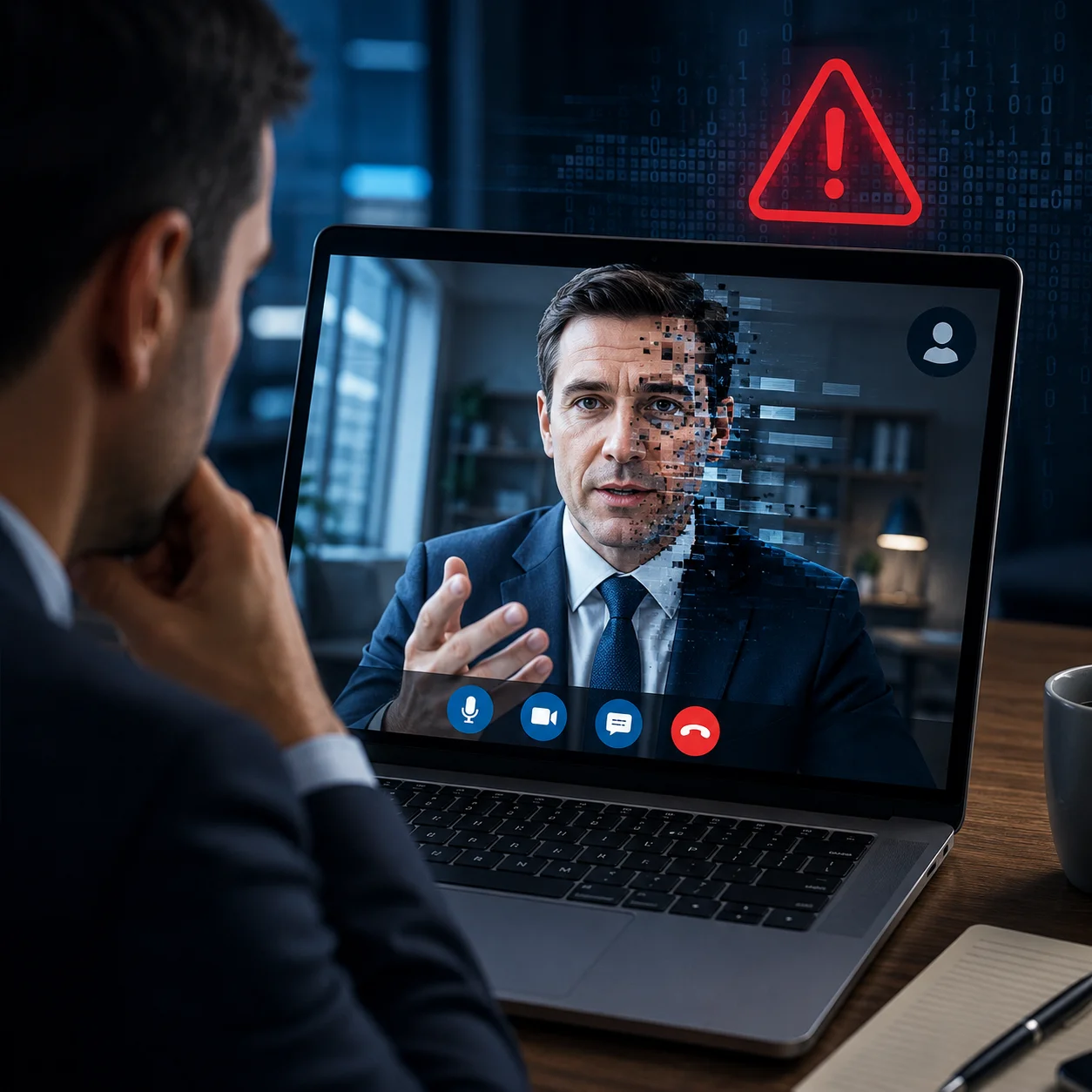
During the call, this "boss" will instruct you to urgently transfer company funds to a new supplier account, or ask you to share sensitive company files and login credentials.
The "Sideways" Verification Hack
If you ever suspect a video call is a deepfake, politely ask the person to do one of two things:
- Turn their head completely 90 degrees to the side.
- Pass their hand rapidly back and forth in front of their face.
Why does this work? Most real-time deepfake renderers in 2026 still struggle heavily with rapid occlusion (when an object blocks the face) and extreme profile angles. If it's a deepfake, the face will glitch, tear, or warp horribly, revealing the scammer underneath.
3. Hyper-Targeted "Spear Phishing" 2.0
Remember the old phishing emails? They were easy to spot: terrible grammar, generic greetings like "Dear Customer," and links that looked like www.payypal-secure-update123.com.
Those days are over. In 2026, scammers use Large Language Models (LLMs) connected to web-scrapers to write flawless, highly personalized emails. These AI bots scrape your LinkedIn profile, your recent tweets, your company directory, and public data to craft an email that is terrifyingly accurate.
An email might reference your exact job title, mention a conference you tweeted about attending last week, name-drop a colleague you work with, and ask you to review an "attached invoice" related to a project you are actually working on. The grammar is perfect. The tone is professional. But the attached PDF contains a zero-click malware payload.
A Note on Document Security
Since malicious PDFs are a primary attack vector, you should never upload your sensitive documents to random cloud converters on the internet. If you need to manipulate PDFs, always use 100% client-side tools.
For example, our Image to PDF, Merge PDF, and Compress PDF tools run entirely inside your browser. Your files never leave your computer, meaning they cannot be intercepted, stored, or manipulated by bad actors on a server.
4. Fake AI Investment Bots & Crypto Traps
Social media platforms like YouTube, X, and TikTok are currently flooded with ads featuring deepfaked celebrities, most commonly Elon Musk, Warren Buffet, or MrBeast, endorsing "revolutionary AI trading bots."
These incredibly realistic videos promise guaranteed daily returns, claiming that the "AI has finally solved the stock market" or "predicts crypto crashes before they happen." When you click the link, you're directed to a beautifully designed, highly professional dashboard. You deposit $500, and within a week, the dashboard shows you've made $5,000.
But the numbers are completely fake. The dashboard is a simulation. When you try to withdraw your "profits," the platform will hit you with "withdrawal taxes," "verification fees," and "server charges." They will keep bleeding you for fees until you realize your original deposit is gone forever.
5. The AI Extortion & Sextortion Nightmare
Perhaps the darkest, most vicious application of generative AI today is non-consensual deepfake pornography used for extortion.
Scammers pull innocent, fully clothed photos of targets from their public Instagram, Facebook, or LinkedIn profiles. They run these images through underground, uncensored AI generators to create highly realistic explicit images of the victim.
They then email or direct message the victim, attaching the images, and threatening to send them to the victim's family, friends, and employer unless a massive ransom is paid in Bitcoin. Even though the images are fake, the sheer panic and fear of social ruin causes many victims to pay immediately. What's worse? Paying marks you as a "payer," and they will often come back demanding double.
If This Happens to You
NEVER PAY THE RANSOM. Paying does not delete the photos; it simply proves to the scammer that you have money and are willing to part with it. Stop communicating immediately. Take screenshots of the threats. Report the extortion attempt to local authorities and platforms like the FBI's Internet Crime Complaint Center (IC3). Finally, lock down your social media accounts to private.
Frequently Asked Questions
How can I tell if a voice on the phone is AI?
AI voices often lack natural breathing sounds, emotional variation, and might sound slightly metallic or compressed. They also struggle with rapid interruptions. If you interrupt the speaker constantly or ask them a highly specific, emotional question about your shared past, the AI bot running the voice will likely pause unnaturally or give a generic response.
Are my social media photos safe to post?
Public photos are always at risk of being scraped. To minimize risk, set your personal accounts to private, only accept friend requests from people you know in real life, and avoid posting high-resolution, straight-on portraits publicly if you don't need to.
Can antivirus software detect deepfakes or AI phishing?
Standard antivirus software struggles to detect AI-generated content because it looks exactly like human content. However, modern email security systems are getting better at flagging the subtle behavioral patterns of AI phishing bots. Your best defense remains your own skepticism.
What should I do if I sent money to a scammer?
Speed is critical. Immediately contact your bank or credit card company and report the fraud; they may be able to freeze the transaction. File a police report, and submit a complaint to the FTC or your country's equivalent cybercrime division. If you sent crypto, the money is unfortunately incredibly difficult to recover.
Is there an app that detects deepfakes?
While companies like Intel and Microsoft are developing deepfake detection software (like Intel's FakeCatcher), there is currently no foolproof, 100% accurate consumer app that detects deepfakes in real-time. The technology is evolving too fast. Your behavioral checks (like the sideways head turn) are currently more reliable.
The Golden Rule for Surviving 2026
Technology is a tool, and like any tool, it can be used to build or to break. The AI revolution brings incredible benefits, but it requires us to upgrade our mental software.
When in doubt, slow down. Scammers rely on urgency and fear to bypass your logic. Take a breath, verify the source through a secondary channel, and remember the new golden rule of the digital age: Verify, then trust.